Learning requires (more than) a little vulnerability. There is no serious version of learning that eliminates the possibility of being wrong. This is why Doug Lemov’s work on a Culture of Error is so important. The goal is to establish a classroom where errors can be surfaced, examined and corrected because students understand that being wrong is a normal and productive part of getting better. Unfortunately, dual competing cultures of Perfectionism and Opting Out are prevalent in childhoods today, and these can undermine our attempts to foster growth and persistence. It’s critical to remember that being wrong isn’t the opposite of learning. Very often, wrong is part of the journey towards right.
Read MoreExplicit teaching is not about regurgitation. It is about building the knowledge, vocabulary and understanding students need to think independently, make meaningful connections, and engage in deeper investigation and inquiry. Discover why strong foundations are the pathway to curiosity, exploration and lifelong learning.
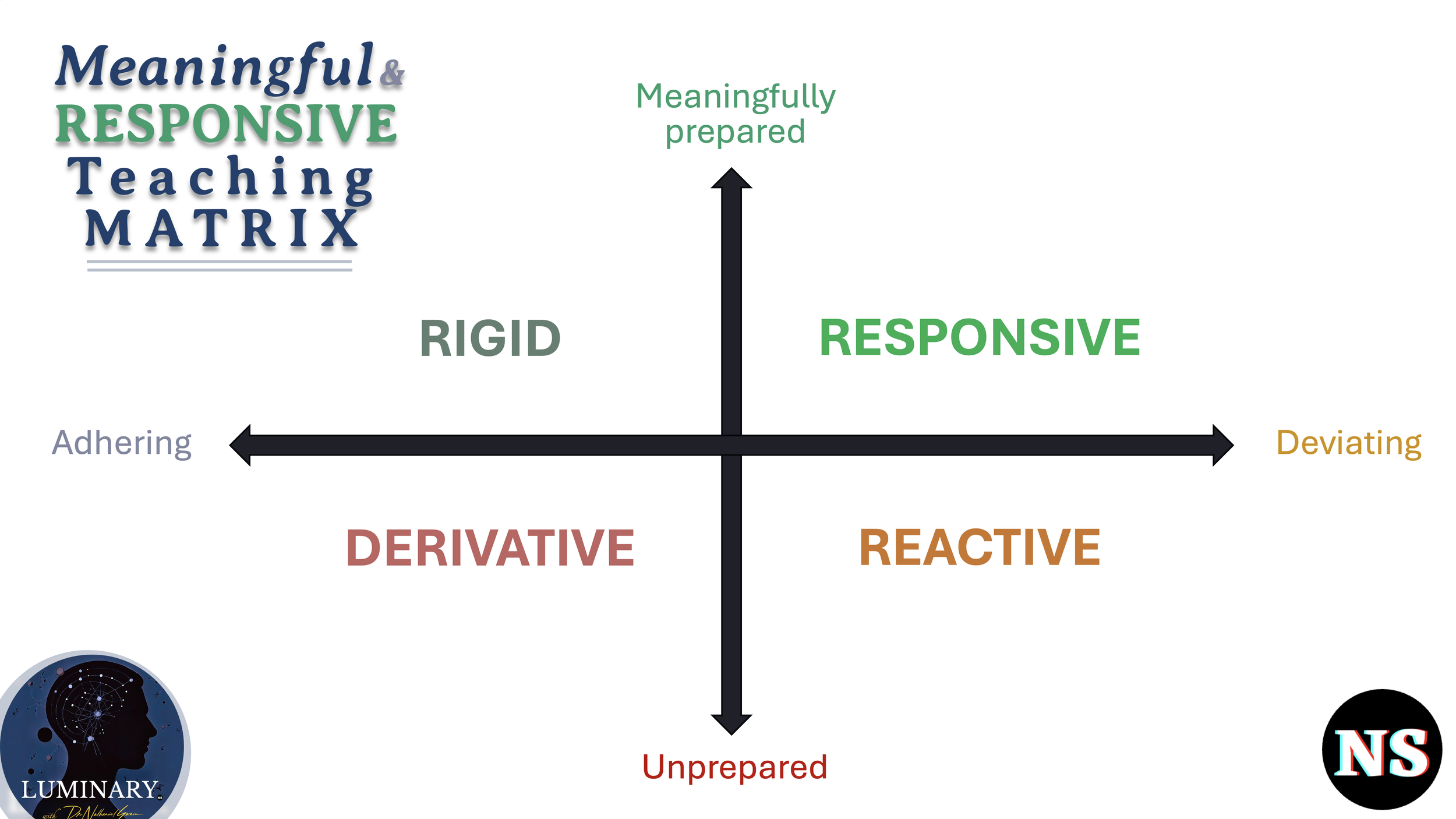
Read MoreGreat teaching sits between two unhelpful extremes. The best teachers aren't those who never leave the script, nor those who proudly abandon it. They're the ones who are prepared enough to know exactly when, why, and how to depart from the plan in service of student learning. Give students the lesson they need, not just the lesson you have planned and learn about the ‘Meaningful and Responsive Teaching Matrix’ inside
Read MoreDiscover how explicit routines, consistent expectations, and simple strategies like the “Do Now” can transform classroom culture. This article explores the link between wellbeing and academic success, offering practical tips for creating calm, structured, and inclusive learning environments.
Read MoreIn this personal narrative, guest author Rachel Holden reflects on her journey toward creating a more intentional and focused classroom environment. Inspired by research and admired setups she encountered online, Holden initially struggled with doubts and limitations—concerned about furniture constraints, logistical challenges, and potential pushback. Despite these hurdles, she began making small, thoughtful changes, gradually transforming her space into one that better supports student learning and engagement. Her story highlights how even modest shifts can lead to meaningful improvements in the classroom.
Read More